



Evergreen Content vs Social Media for Real Estate Agents
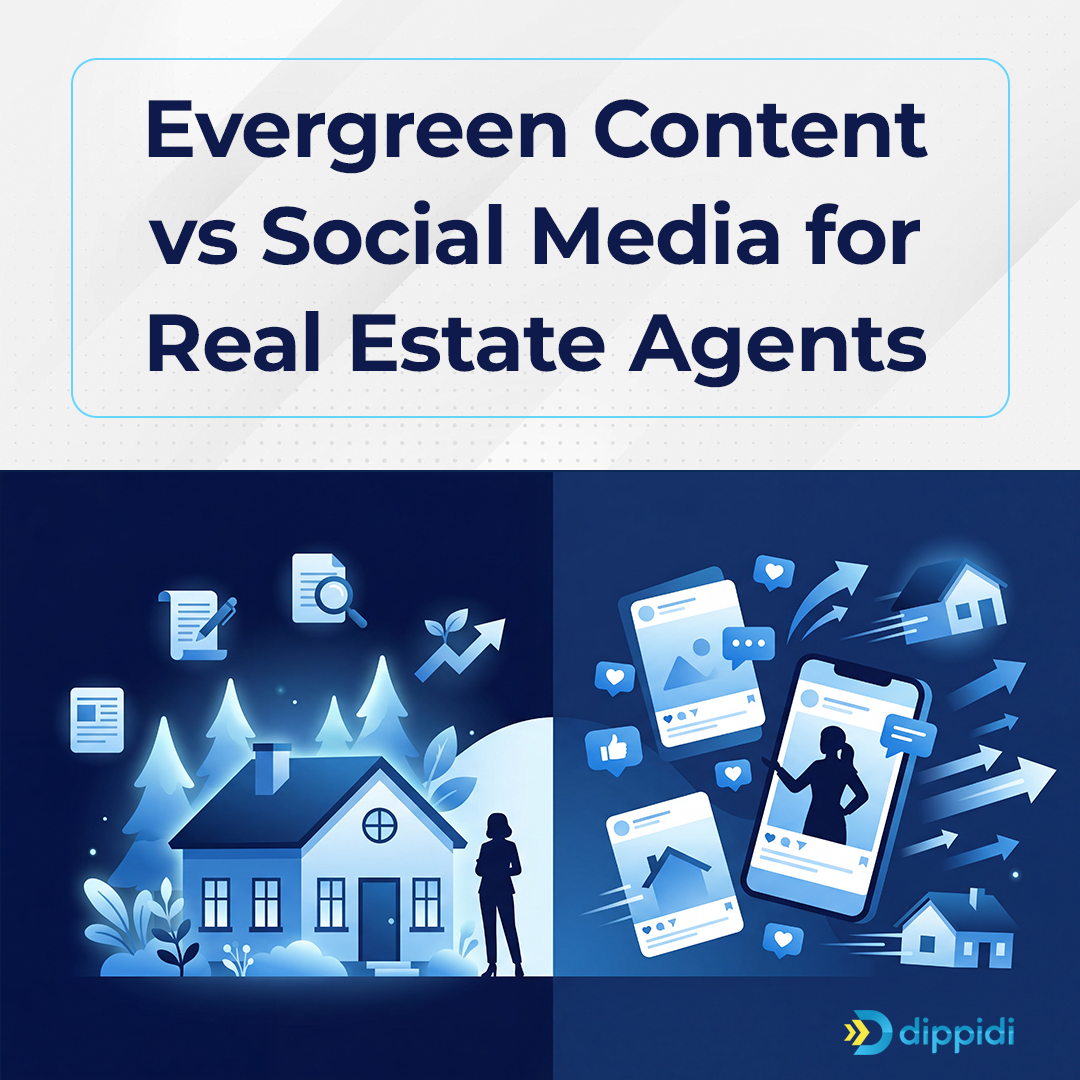
Real estate agents today have more marketing options than ever before. Platforms like Instagram, Facebook, and TikTok make it easy to connect with audiences quickly, while blogs, YouTube videos, and search-driven content offer long-term visibility.
But many agents struggle with an important question:
Should you focus on social media or evergreen content?
The truth is that both strategies play valuable roles. However, agents who want sustainable growth often rely heavily on evergreen content for real estate agents as part of a stronger long-term real estate marketing strategy.
Let’s explore the difference between evergreen content and social media—and how each fits into an effective content strategy for real estate agents.
What Is Evergreen Content?
Evergreen content is content that remains useful and relevant for a long period of time. Unlike posts that disappear after a few days, evergreen content continues to attract traffic months or even years after it is published.
Examples of evergreen content for real estate agents include:
- Neighborhood guides
- “Moving to” city guides
- Cost of living breakdowns
- Home buying or selling tips
- Market education videos
- Local lifestyle guides
Because people continually search for this information online, evergreen content supports long-term real estate marketing by generating consistent visibility.
For example, a video titled “Moving to Tampa Florida – What You Need to Know” could attract potential buyers for years.
What Is Social Media Marketing for Real Estate?
Social media marketing for real estate focuses on short-form, fast-moving content designed to engage audiences quickly.
Common examples include:
- Property listing posts
- Instagram Reels or TikToks
- Open house announcements
- Market update posts
- Behind-the-scenes agent content
- Local community highlights
Social media platforms are excellent for building brand awareness, staying visible, and maintaining relationships with your audience.
However, the lifespan of social media posts is usually very short—often just 24 to 72 hours.
This is why relying solely on social media can limit the effectiveness of your long-term real estate marketing.
The Biggest Difference: Longevity
The biggest difference between evergreen content and social media is how long the content remains discoverable.
Social Media Content
Social media content tends to have a short life cycle. Posts quickly move down feeds as new content appears.
While some posts may go viral or generate engagement temporarily, most lose visibility within days.
That means agents must constantly create new posts to maintain visibility.
Evergreen Content
Evergreen content, on the other hand, is designed to be found through search engines like Google or YouTube.
When someone searches:
- “Best neighborhoods in Dallas”
- “Moving to Phoenix Arizona”
- “Cost of living in Charlotte”
well-optimized content can appear in search results for years.
This makes evergreen content for real estate agents one of the most powerful tools for long-term real estate marketing.
Why Evergreen Content Builds Authority
One of the biggest advantages of evergreen content is that it positions agents as trusted local experts.
When buyers and sellers repeatedly find helpful information from the same agent online, that agent naturally builds credibility.
This is why evergreen content plays such a key role in an effective content strategy for real estate agents.
Instead of constantly promoting listings, agents can provide valuable information that helps people make informed decisions.
Over time, that trust turns into inbound leads.
Why Social Media Still Matters
While evergreen content is powerful, social media marketing for real estate still plays an important role.
Social media helps agents:
- Stay visible with their audience
- Share listings and market updates
- Build personality and brand presence
- Engage with local communities
- Promote new content
Social media also helps amplify evergreen content.
For example, a real estate agent could share a YouTube neighborhood guide or blog post across social media platforms to drive additional views.
This combination strengthens the overall content strategy for real estate agents.
Building a Balanced Content Strategy
The most effective marketing strategies combine both evergreen and social media content.
A balanced content strategy for real estate agents might look like this:
Evergreen Content (Foundation)
Focus on creating content that answers common questions buyers and sellers search for online.
Examples include:
- Moving to your city guides
- Neighborhood breakdowns
- Cost of living videos
- Local lifestyle content
- First-time buyer education
These pieces support long-term real estate marketing because they continue generating traffic over time.
Social Media Content (Distribution)
Social media then becomes a way to promote your expertise and stay connected with your audience.
Examples include:
- Short clips from longer videos
- Listing promotions
- Client success stories
- Local community posts
- Personal brand content
This supports social media marketing for real estate while also helping drive viewers toward your evergreen content.
Why Long-Term Marketing Wins
Many real estate agents fall into the trap of focusing only on short-term marketing tactics.
While social media engagement can feel rewarding, it often requires constant effort just to maintain visibility.
Evergreen content, on the other hand, continues working for you even when you're not actively posting.
That’s why evergreen content for real estate agents is such an important part of long-term real estate marketing.
Over time, agents who invest in evergreen content build a digital library of valuable resources that attract new clients organically.
Final Thoughts
Both evergreen content and social media marketing for real estate play important roles in modern marketing strategies.
Social media helps agents stay visible and connected with their audience, while evergreen content builds long-term authority and discoverability.
When combined effectively, these strategies create a powerful content strategy for real estate agents that supports sustainable growth.
Agents who focus on long-term real estate marketing—rather than just short-term engagement—position themselves to generate consistent leads and establish lasting authority in their markets.
Ready to Build a Smarter Real Estate Content Strategy?
If you want to create a stronger content strategy for real estate agents and start using evergreen content for real estate agents to attract more local clients, visit Dippidi.com to learn how our tools help agents build authority and grow their business online



