


How to Generate Buyer Leads for Real Estate Without Chasing Cold Prospects
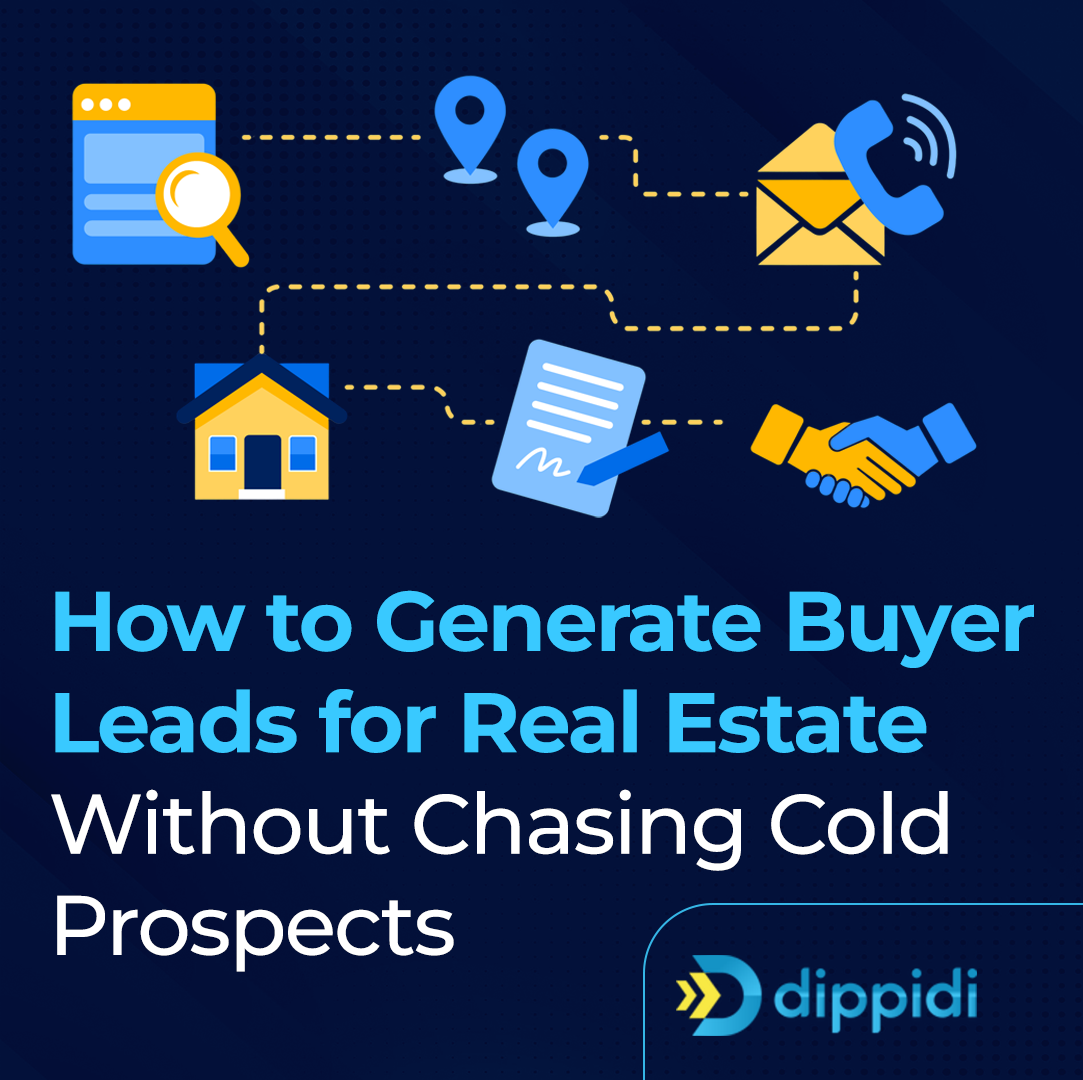
If your buyer lead generation strategy depends on calling strangers all day and hoping someone happens to be ready to move, there's a better way.
Today's buyers are already online searching for homes, comparing neighborhoods, researching mortgage options, watching real estate videos, and trying to understand their local market.
The opportunity for agents is to get in front of those buyers while they're actively looking for information.
A strong strategy for generating real estate buyer leads doesn't start with chasing people. It starts with creating marketing that attracts buyers, gives them something useful, captures their information, and nurtures the relationship until they're ready to have a conversation.
Here's how to build that system.
1. Start With Buyer Intent
Not every online prospect has the same level of intent.
Someone casually watching a home tour on social media may be months away from buying. Someone searching Google for "new construction homes in [City]" could be much closer to taking action.
Your marketing should account for those differences.
Think about what buyers search for before contacting an agent:
- Homes for sale in a specific city
- New construction communities
- Homes within a certain price range
- Best neighborhoods in an area
- First-time homebuyer information
- Relocation information
- Mortgage and affordability questions
- Specific property types or features
These searches reveal what buyers want.
Instead of interrupting random consumers with a generic "Need a Realtor?" message, build your real estate online lead generation strategy around the questions and searches buyers are already making.
2. Create Offers Buyers Actually Want
One of the simplest ways to improve buyer lead generation is to stop making the agent the offer.
"Work with me" isn't particularly compelling to someone who just started researching homes.
Give buyers something useful first.
For example, you could offer:
A customized home search: Give buyers access to listings that match their location, price range, and property preferences.
A first-time buyer guide: Explain financing, down payments, inspections, closing costs, and the buying process.
A relocation guide: Help buyers understand neighborhoods, commute times, amenities, housing options, and lifestyle differences.
A new construction list: Provide information about communities, builders, available homes, and incentives.
A neighborhood guide: Help prospects compare areas before deciding where they want to live.
A list of homes within a specific budget: "See homes under $500,000 in [City]" is usually more compelling than "Contact me for real estate help."
The best offers solve an immediate problem.
That's how you turn anonymous online traffic into real estate buyer leads you can actually nurture.
3. Capture High-Intent Buyers Through Google
Google can be especially valuable because buyers are actively telling the search engine what they want.
Consider someone searching:
"Condos for sale in [City]"
"New homes near [Neighborhood]"
"Best Realtor for first-time buyers in [City]"
"Homes with pools for sale in [City]"
Those aren't random impressions. They're signals of intent.
Google Ads can help agents appear for relevant searches and send prospects to an IDX search, landing page, buyer guide, listing funnel, or appointment page.
SEO can support the same strategy organically.
Create useful pages and articles around your market, neighborhoods, buyer questions, relocation topics, and property searches. Over time, those pages can help you become visible when potential clients are researching their options.
Combining paid search with SEO gives your real estate online lead generation strategy both immediate and long-term opportunities.
4. Use Facebook and Instagram to Create Demand
Google helps capture existing intent.
Facebook and Instagram can help create it.
A potential buyer may not be actively searching for an agent when they open Instagram, but the right property, neighborhood, or educational offer can get their attention.
Instead of only boosting listing posts, create campaigns designed specifically for lead generation.
For example:
"Thinking about moving to Tampa? Download our relocation guide."
"Looking for a home under $600K? See what's currently available."
"Buying your first home? Get our step-by-step buyer checklist."
"Want new construction? See communities currently selling in your area."
These campaigns give people a reason to raise their hand.
From there, prospects can enter your CRM and begin receiving relevant follow-up.
This approach turns social advertising into a repeatable source of leads for real estate agents rather than simply generating likes and impressions.
5. Build Landing Pages That Match Your Ads
Getting the click is only half the job.
What happens next?
If an advertisement promises a list of new construction homes but sends the buyer to a generic homepage, you've created unnecessary friction.
Instead, create a clear path:
Ad → Relevant Landing Page → Lead Capture → CRM → Follow-Up
The landing page should continue the same conversation the advertisement started.
If the ad promises homes under $500,000, show information related to homes under $500,000.
If it promotes a relocation guide, make the guide easy to access.
If the buyer wants to schedule a consultation, make booking simple.
The fewer unnecessary steps between interest and action, the easier it becomes to convert traffic into opportunities.
6. Follow Up While the Buyer Is Still Interested
Generating the lead isn't the finish line.
It's the starting line.
If someone requests property information and doesn't hear from you until the next day, their attention may already be somewhere else.
Your system should help you respond quickly.
That might include an immediate text message, email confirmation, CRM notification, AI-powered conversation, appointment link, or task prompting an agent to call.
Dippidi's approach connects lead capture with automated follow-up and CRM workflows so prospects can begin receiving communication after they opt in rather than simply sitting in a database.
Automation doesn't mean eliminating personal contact.
It means helping your team create that personal contact faster.
7. Nurture Buyers Who Aren't Ready Yet
Here's where many agents lose potential business.
A prospect says:
"I'm probably six months away."
The agent marks them as cold and moves on.
But six months away doesn't mean "bad lead."
It means not yet.
Buying a home is a major financial decision, and prospects may spend months researching before they're ready to make an offer.
Build follow-up that helps them during that process.
Send new listings.
Share neighborhood information.
Provide market updates.
Answer financing questions.
Send educational videos and articles.
Check in periodically.
Invite them to schedule a buyer consultation when they're ready.
A CRM and automated nurturing system can help maintain these relationships without requiring agents to manually remember every future follow-up. Dippidi's platform, for example, is designed to organize buyer leads and support ongoing follow-up through channels such as text and email.
The objective isn't to constantly ask, "Are you ready to buy yet?"
It's to remain useful until they are.
8. Use Retargeting Instead of Starting From Zero
Most people won't become a lead the first time they encounter your business.
They might visit your website, browse a few properties, watch one of your videos, engage with a social post, or click an advertisement without submitting their information.
That doesn't mean the interaction was wasted.
Retargeting campaigns can help you remain visible to people who have already shown interest.
You might retarget prospects with:
- New listings
- Buyer guides
- Neighborhood videos
- Market updates
- Client testimonials
- Educational content
- Buyer consultation offers
This allows you to spend part of your marketing budget staying in front of warmer audiences instead of constantly introducing yourself to strangers.
9. Build Trust Before Asking for an Appointment
There's another major advantage to inbound lead generation:
You can build trust before speaking with the prospect.
Think about what a potential buyer might do after seeing your advertisement.
They may Google your name.
Visit your website.
Check your reviews.
Look at your Instagram.
Watch your videos.
Read your blog.
The stronger your online presence is, the easier it becomes for prospects to understand who you are and why they might want your help.
This is why content should be part of real estate online lead generation.
Create resources buyers actually need.
Talk about neighborhoods.
Explain the buying process.
Break down local market conditions.
Answer common questions.
Create videos about living in your market.
Show buyers that you understand the decisions they're trying to make.
Then, when they finally speak with you, you aren't necessarily starting the relationship from zero.
10. Measure Appointments, Not Just Leads
Not all leads for real estate agents are equally valuable.
Suppose Campaign A generates 100 leads at $10 each.
Campaign B generates 40 leads at $25 each.
Campaign A looks better based purely on cost per lead.
But what if Campaign A produces two appointments while Campaign B produces ten?
Suddenly, the picture changes.
Don't judge your marketing only by how cheaply you can generate contact information.
Track the entire funnel:
Traffic → Leads → Conversations → Qualified Buyers → Appointments → Clients → Closings
Those numbers tell you which campaigns are actually helping grow your business.
Stop Chasing. Start Attracting.
There will always be a place for prospecting in real estate.
But prospecting shouldn't be your only source of business.
A modern buyer lead generation system can help you reach prospects while they're searching, capture their information with relevant offers, respond quickly, nurture them over time, and stay visible until they're ready for a conversation.
That's the difference between chasing cold prospects and building a marketing engine.
Dippidi helps real estate agents, teams, and brokerages generate and convert buyer opportunities through Google Ads, Facebook and Instagram Ads, SEO, landing pages, CRM automation, and AI-powered follow-up systems.
If you're ready to generate more real estate buyer leads without spending your entire day chasing cold prospects, Dippidi can help you build a complete real estate online lead generation system designed to attract, capture, nurture, and convert more opportunities.
Schedule a call with Dippidi and start building a more predictable source of buyer leads for your real estate business.